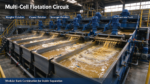
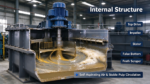
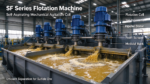
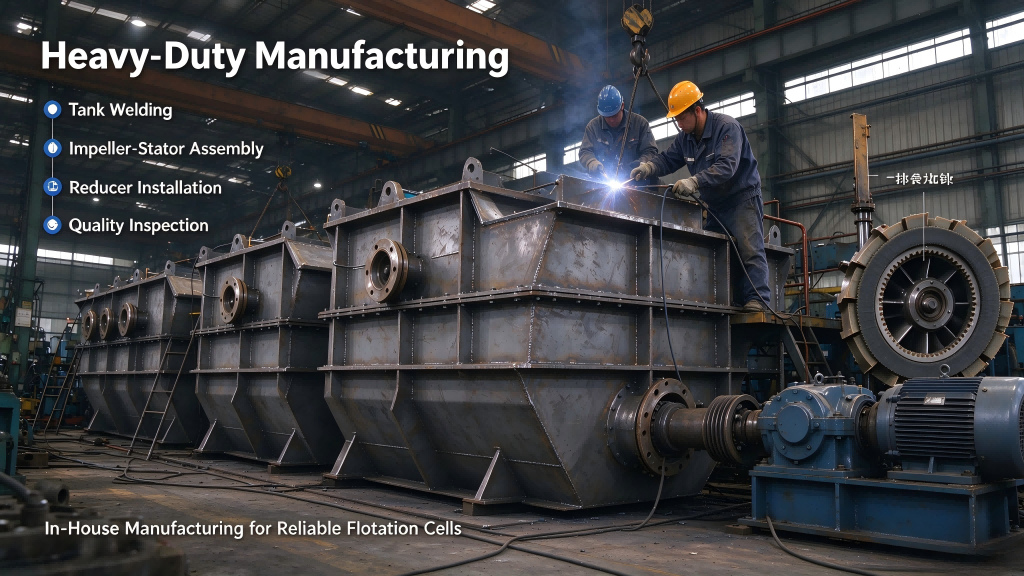
EPIC SF‑series self‑aspirating mechanical agitation flotation machine. Core separation equipment for sulfide‑gold, copper‑lead‑zinc ore. Self‑air‑suction design without external blower, modular multi‑cell bank combination, customizable for overseas mining‑projects。
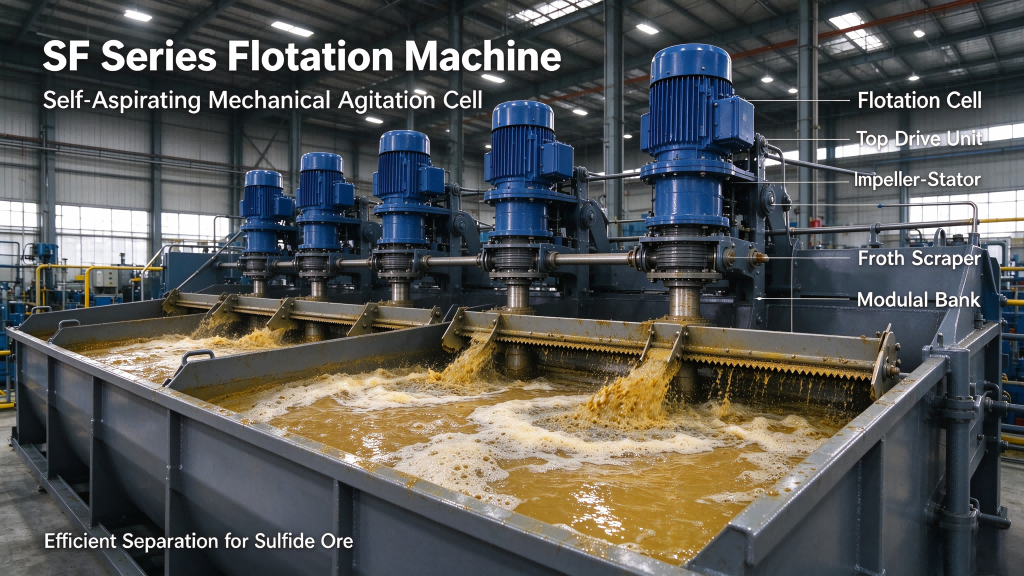
SF‑Series Mechanical Agitation Flotation Machine | EPIC Mineral Froth Flotation Cell
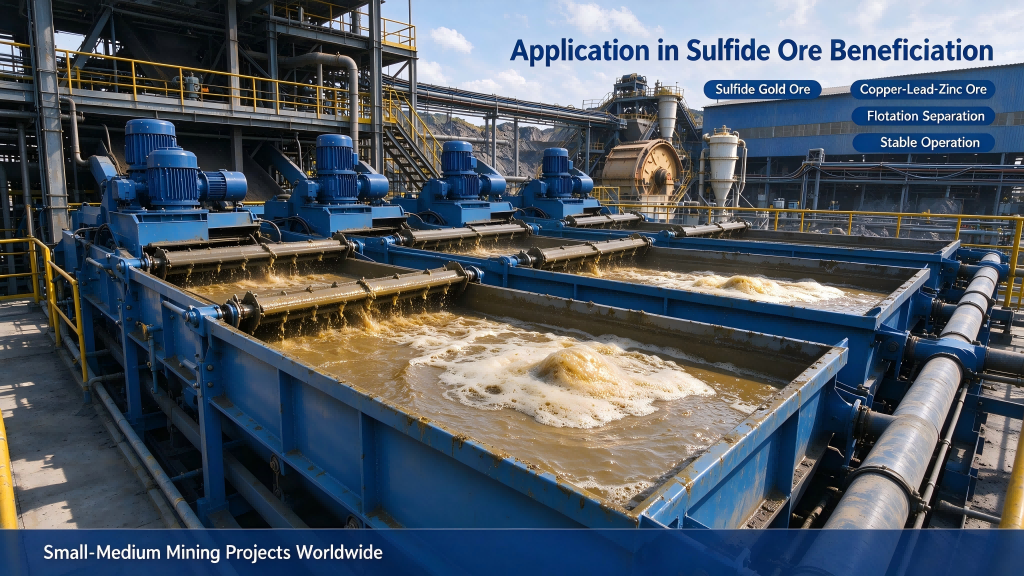
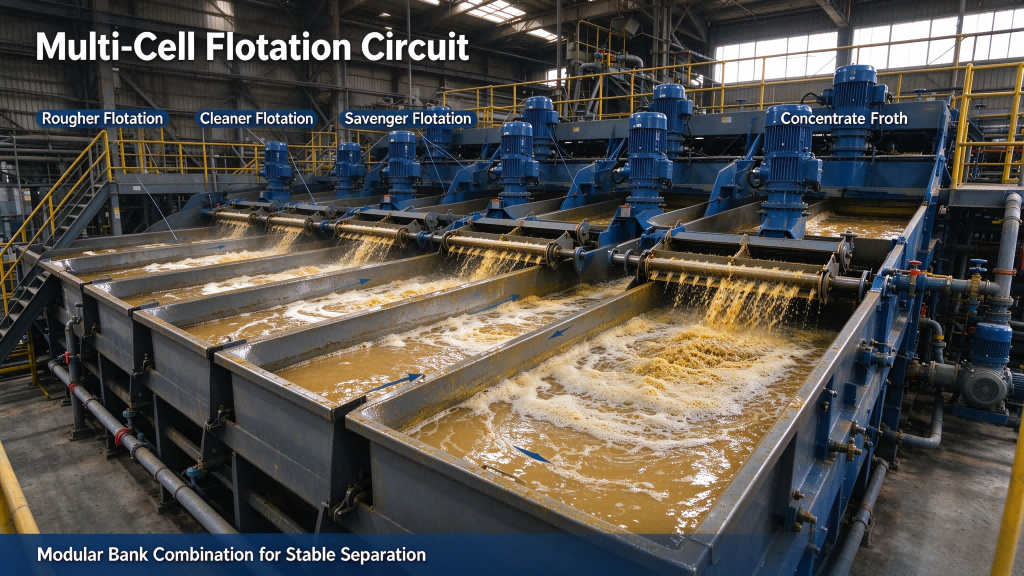
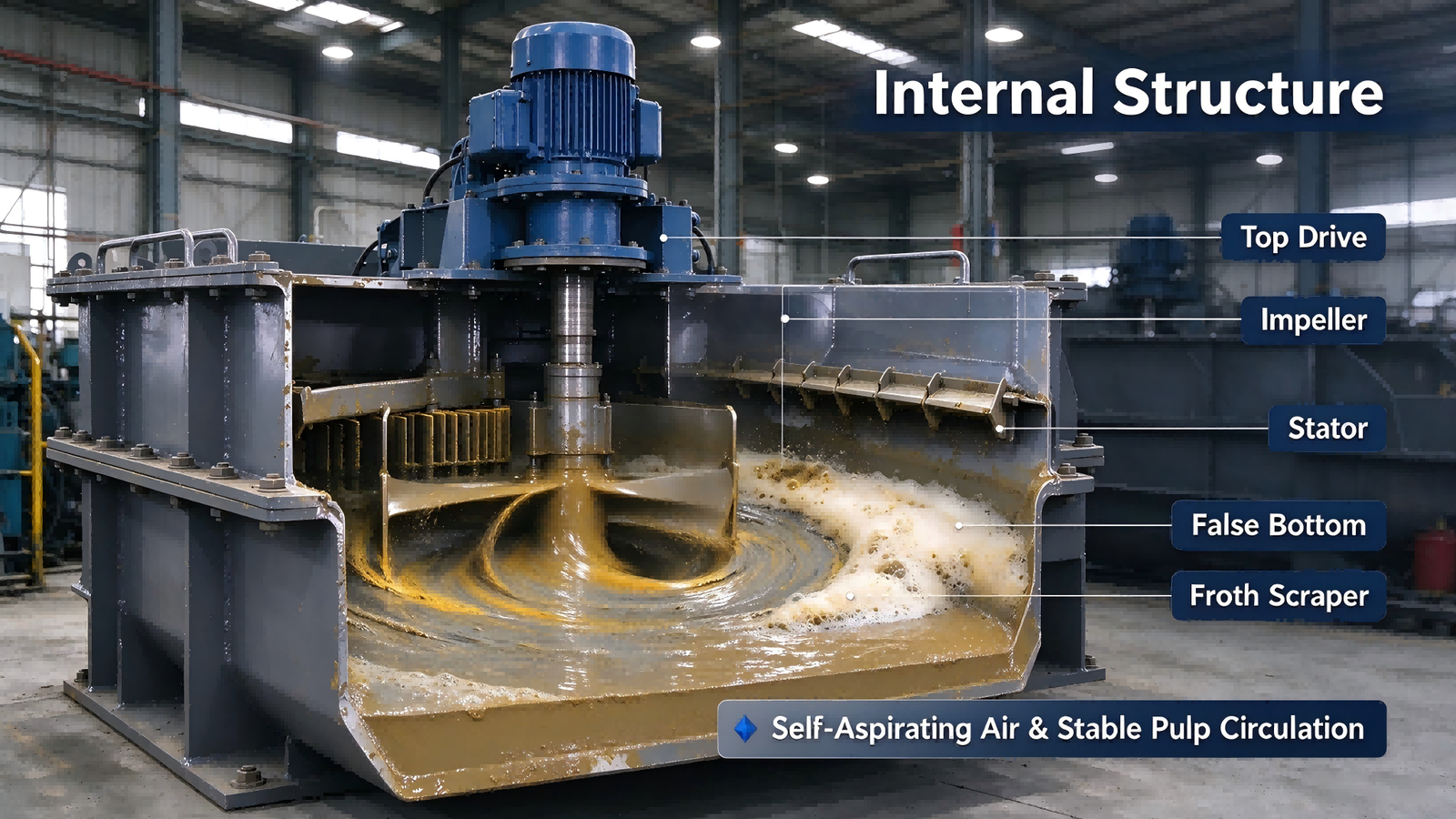
EPIC SF‑series self‑aspirating mechanical agitation flotation machine is core separation equipment for non‑ferrous & precious‑metal mineral processing plant. Impeller‑stator assembly creates negative pressure to suck air automatically, mix ore pulp and flotation reagents, generate uniform fine bubbles. Valuable mineral particles adhere to bubbles and form froth concentrate scraped by froth‑scraper. Multiple cells connect in banks to complete roughing, cleaning and scavenger flotation circuit. Widely applied for copper, lead‑zinc, sulfide‑gold, graphite ore projects across Africa, Central Asia, Southeast Asia and South America.
Key Advantages & Product Highlights
- Self‑aspirating Air Design: No external air blower required. Impeller‑stator produces negative pressure for automatic air suction, reduce auxiliary equipment investment and pipeline complexity.
- Efficient Pulp Circulation: Optimized tank‑body and false‑bottom structure, realize double‑direction slurry circulation, keep coarse mineral particles fully suspended, reduce sedimentation inside cell.
- High Mineral Recovery Efficiency: Uniform fine‑bubble distribution, good bubble‑mineral attachment performance, stable flotation indexes for roughing‑cleaning‑scavenger circuit.
- Wear‑resistant Impeller & Stator: Rubber‑covered impeller‑stater assembly, strong anti‑abrasion performance, extend service life and lower operating‑cost.
- Flexible Bank Combination: Standard modular unit‑cell structure, easy to assemble multi‑cell banks. Intermediate‑pulp self‑flow between adjacent cells, no extra froth pump needed.
- Overseas Customization Support: IEC‑standard motor for 415V‑50Hz /460V‑60Hz. Optional automatic froth‑level monitoring and reagent dosing inter‑lock system.
- Convenient Maintenance: Top‑mounted drive unit; impeller, stator, scraper parts can be inspected and replaced conveniently without heavy disassembly of tank body.
Main Technical Parameters & Single‑Cell Reference Footprint
| Model | Effective Volume(m³) | Pulp Handling Capacity(m³/min) | Agitator Motor(kW) | Scraper Motor(kW) | Impeller Speed(r/min) | Single‑Cell Reference Floor Area(㎡) | Single‑Cell Weight(t) |
|---|---|---|---|---|---|---|---|
| SF‑0.37 | 0.37 | 0.2‑0.4 | 1.5 | 0.55 | 400 | 2.4 | 0.47 |
| SF‑0.7 | 0.7 | 0.3‑1.0 | 3.0 | 1.1 | 336 | 3.2 | 0.97 |
| SF‑1.2 | 1.2 | 0.6‑1.6 | 5.5 | 1.1 | 312 | 4.0 | 1.40 |
| SF‑2.8 | 2.8 | 1.5‑3.5 | 11.0 | 1.5 | 268 | 5.8 | 2.12 |
| SF‑4.0 | 4.0 | 2.0‑4.0 | 15.0 | 1.5 | 238 | 7.2 | 2.85 |
Applicable Ores & Typical Application Scenarios
- ✅ Suitable Ore Types
- Sulfide‑gold ore, gold‑silver polymetallic ore
- Copper ore, lead‑zinc ore, nickel‑molybdenum non‑ferrous metal ore
- Graphite ore, fluorite, barite and other non‑metallic minerals
- Typical Projects
- Small‑medium non‑ferrous metal flotation beneficiation plant (roughing‑cleaning‑scavenger bank)
- Sulfide‑gold ore processing plant, match with ball‑mill grinding circuit
- Old mineral‑processing plant reconstruction & capacity‑expansion upgrade
- ⚠️ Note: SF self‑suction flotation cell is mainly for sulfide mineral flotation. For oxide‑ore processing, please confirm ore‑mineralogy before model‑selection.
FAQ
How many flotation cells do I need for my mineral plant?
Cell quantity depends on ore‑grade, processing capacity, flotation‑residence‑time requirement and process‑flow (roughing, cleaning, scavenger). Our metallurgical engineer will calculate exact cell‑bank configuration after receiving your ore‑sample report and plant throughput data.
What is the difference between SF‑type and forced‑air flotation machine?
SF‑series adopts self‑aspirating design, no extra air‑blower required, simple layout for small‑medium plant. Forced‑air flotation machine needs independent blower, which is suitable for large‑capacity high‑intensity flotation project with higher total investment cost.
What pulp density is suitable for SF flotation machine?
Recommended pulp solid‑density: 20‑35%. Too‑high pulp density will reduce air‑dispersion efficiency and flotation recovery rate; too‑low density will increase reagent consumption and enlarge equipment‑volume requirement.
What are key routine‑maintenance items for flotation cell?
1. Check impeller‑stator rubber‑coating abrasion status every 2‑3 months, replace severely‑worn parts timely;
2. Inspect reducer oil‑level & oil‑quality per shift;
3. Check froth‑scraper blade wear and rotation‑condition;
4. Keep tank‑body overflow channel free of blockage;
5. Monitor motor current, vibration and abnormal noise in continuous‑production.
Can SF flotation machine work together with overflow ball‑mill?
Yes. Ball‑mill + hydrocyclone closed‑circuit grinding feeds qualified fine pulp into flotation bank, which is standard configuration for sulfide‑gold / copper‑lead‑zinc beneficiation plant.
What after‑sales service can you provide?
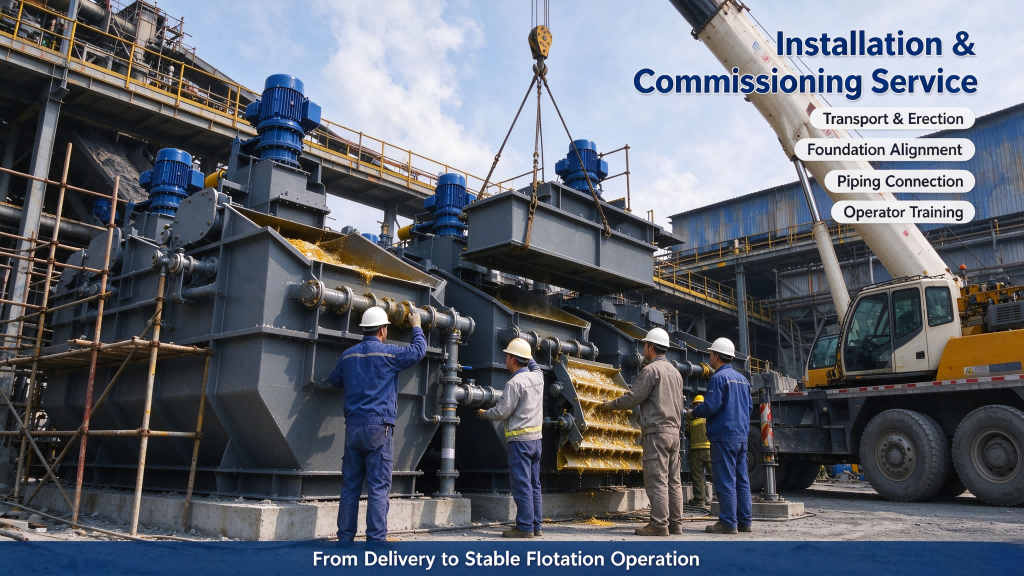
We supply flotation‑bank layout drawing, foundation drawing, operation‑maintenance manual, overseas‑engineer on‑site installation‑guidance, operator‑training, and long‑term spare‑parts supply for impeller‑stator, scraper‑blades, reducer and other wearing‑parts.
Get In Touch
Please offer your ore‑mineral‑type, plant daily‑throughput, pulp‑density and target‑recovery‑index. Our metallurgical‑engineer will select suitable flotation‑cell model and calculate complete cell‑bank combination for your mining‑project.





Get in touch
Have a project in mind ? Send us your ore assay report, mine location and target capacity. Our mining engineers will prepare a customized process design, equipment list and quotation within 48 hours.