

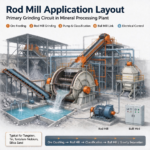
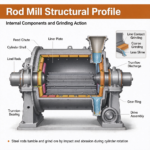
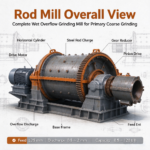
Rod mill adopts steel rods as grinding media for line-contact coarse grinding. It minimizes over-grinding and slime generation, delivering uniform particle size. Widely used for tungsten & tin gravity separation, silica sand production and primary grinding before ball mill.

Rod Mill
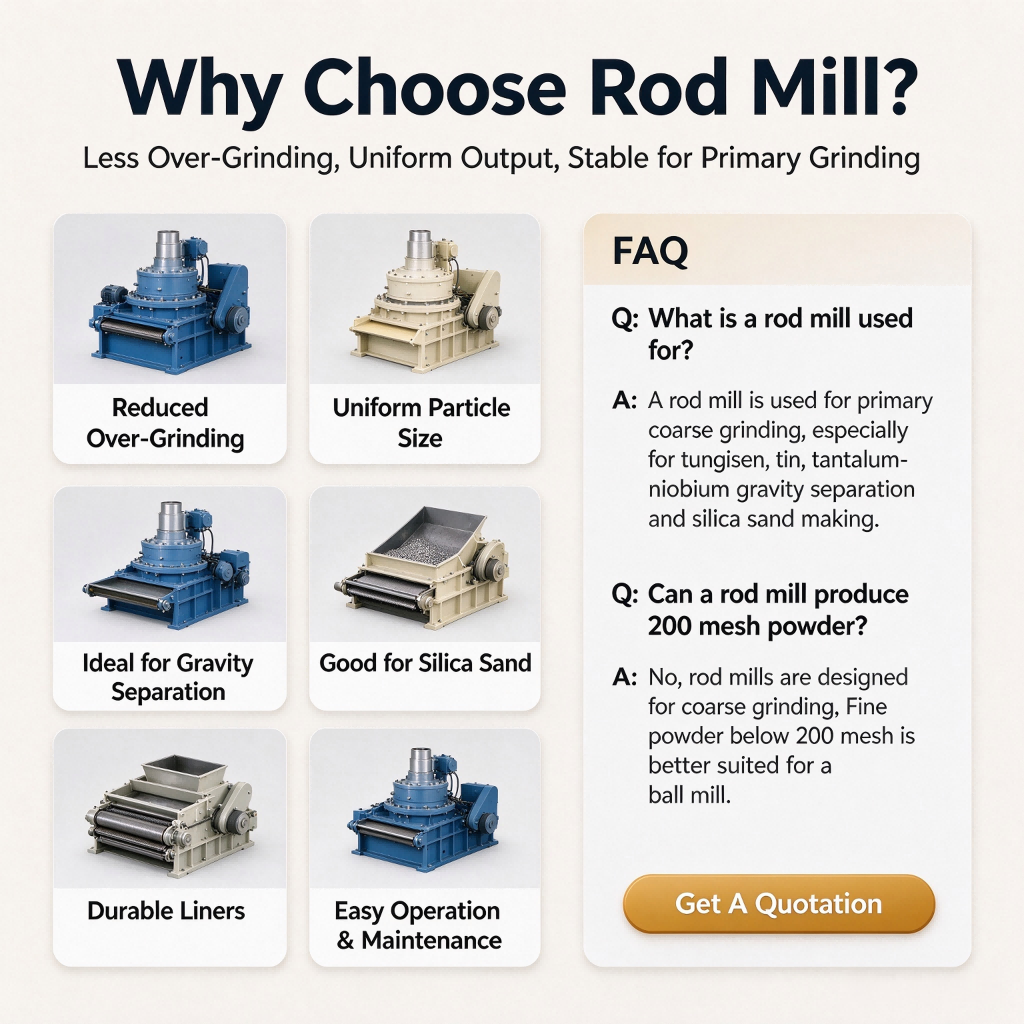
- - Line-contact grinding reduces over-grinding and slime loss for gravity separation
- - Stable, uniform discharge particle size
- - Ideal primary coarse grinding equipment before ball mill
- - Suitable for silica / quartz sand production
- - High manganese steel liners for long service life
- - Wet overflow design, easy operation and maintenance
Rod Mill
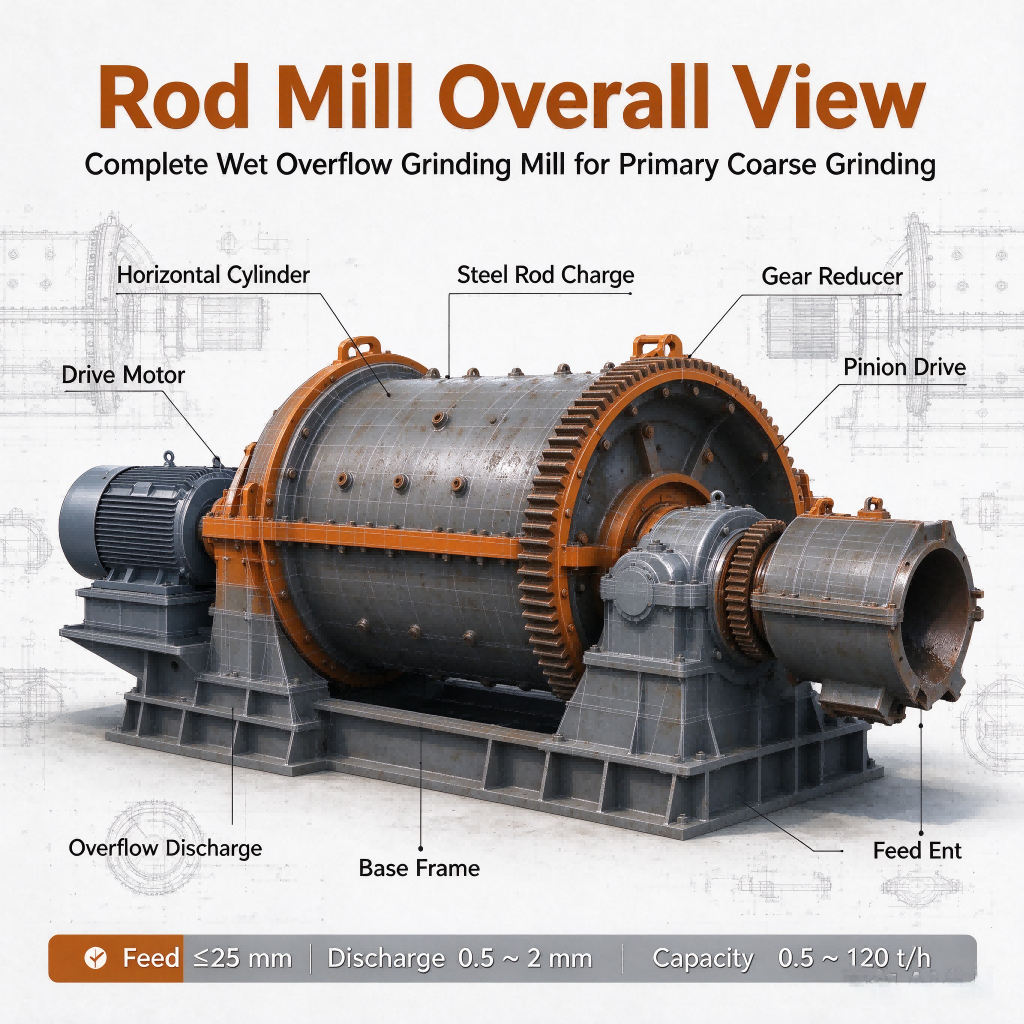
Wet Overflow Type Rod Mill for Primary Coarse Grinding, Gravity Separation & Manufactured Sand Making
Product Introduction
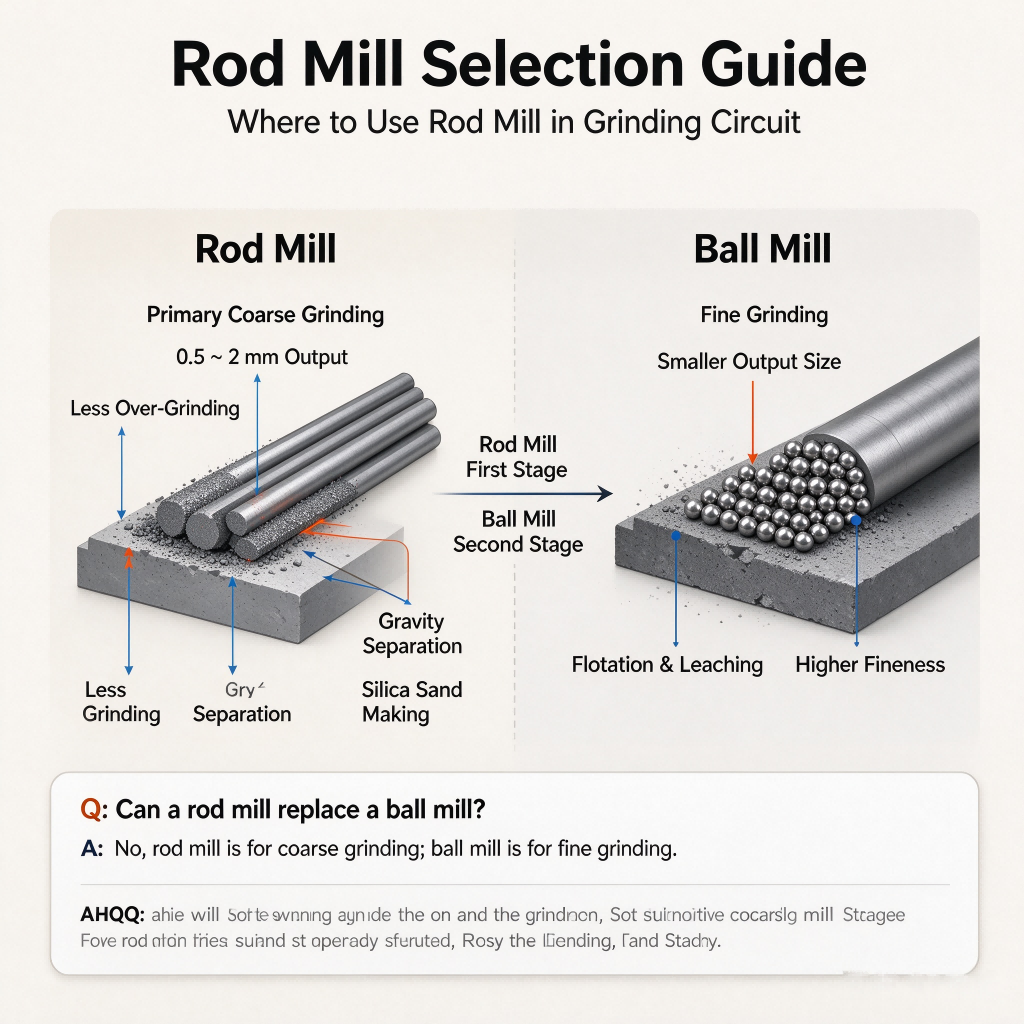
Rod mill is a type of tumbling grinding mill that uses steel rods as grinding media instead of steel balls. Steel rods create line contact with ore particles during rotation, which effectively restrains over-grinding and reduces excessive fine slime. It produces a relatively uniform particle size distribution with fewer ultra-fine fractions.
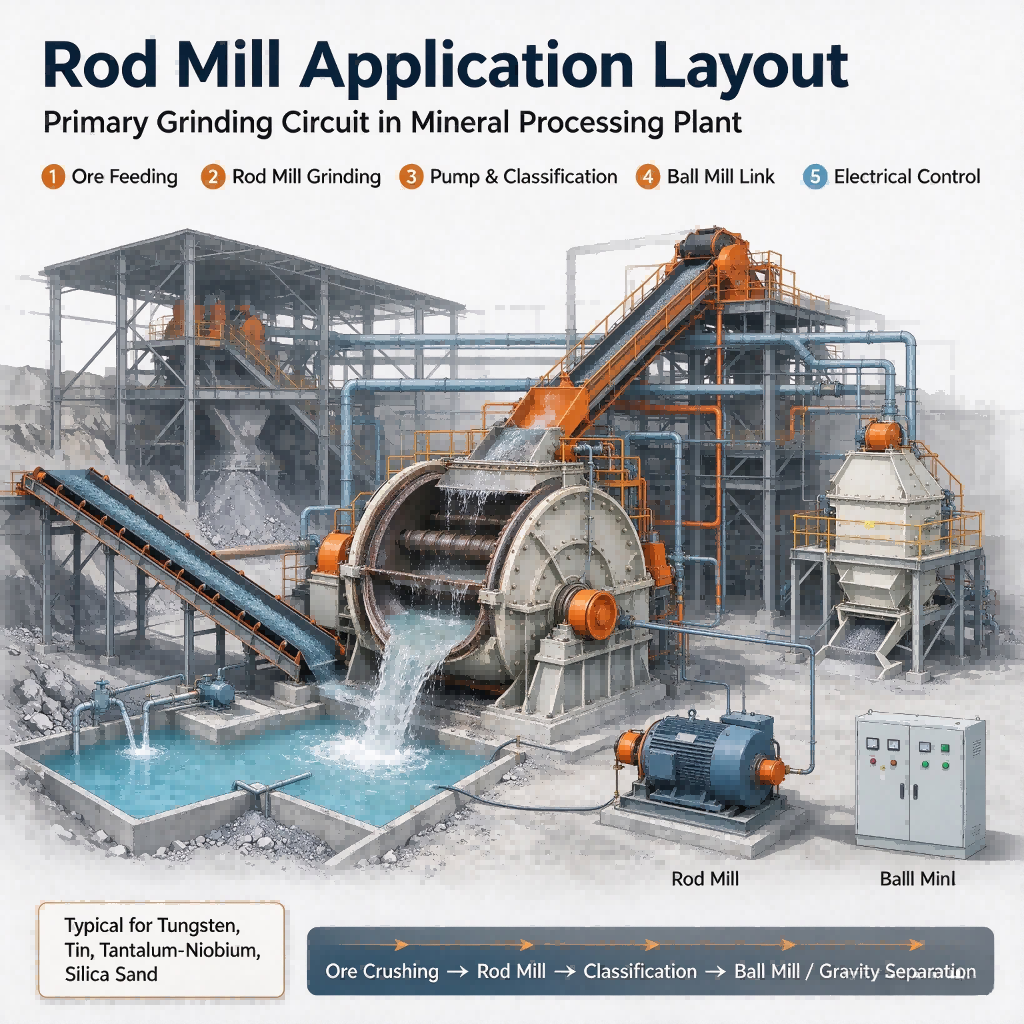
Rod mills are normally applied in the first-stage coarse grinding circuit. They are extremely popular for tungsten, tin, tantalum‑niobium gravity separation projects where slime loss must be controlled. They are also widely used for quartz silica sand production, pre-grinding before ball mills, and coarse grinding of various brittle ores.
Technical Specifications
| Item | Parameter |
|---|---|
| Grinding Media | High Carbon Steel Rods |
| Discharge Type | Wet Overflow / End Peripheral Discharge |
| Feed Size | ≤ 25 mm |
| Discharge Fineness | 0.5 mm ~ 2 mm (Adjustable) |
| Drive Mode | Gear & Pinion Drive / Helical Gear Reducer |
| Liner Material | High Manganese Steel / Alloy Steel |
| Control Option | Local Control / Optional PLC Automatic Control |
| Capacity Range | 0.5 t/h ~ 120 t/h (Customized) |
| Motor Voltage | 380V / 415V / 660V Customizable |
Key Advantages & Benefits
- Less Over-grinding & Low Slime Generation: Line-contact grinding media avoids smashing brittle ore into fine mud, critical for gravity separation recovery.
- Uniform Discharge Granularity: Narrow particle size distribution, ideal for silica sand and gravity ore dressing.
- Flexible Primary Grinding: Works as first-stage grinding before ball mill for two-stage grinding circuits.
- Good Adaptability to Sticky & Wet Ore: Wet overflow design handles damp ore better than fine cone crushers.
- Durable Wear Parts: High manganese liners and alloy steel rods extend service life and reduce downtime.
- Simple Structure & Easy Maintenance: Stable operation, easy access for liner and steel rod replacement.
Typical Applications
- Tungsten, tin, tantalum‑niobium ore gravity separation plant (shaking table, jigging circuit)
- Primary coarse grinding before ball mill in two-stage mineral processing
- Quartz sand, silica sand, glass sand manufactured sand production line
- Iron ore, copper ore, phosphate rock, feldspar coarse grinding
- Coal, coke, slag and other brittle material grinding
- Mine concentrator, small and medium mineral processing project
FAQ
Q1: What is the difference between rod mill and ball mill?
A1: Rod mill uses steel rods for line-contact grinding, mainly for coarse grinding and reduces slime. Ball mill uses steel balls with point contact, for fine grinding to get finer powder for flotation, leaching and CIL/CIP gold processing.
Q2: Which ore is most suitable for rod mill?
A2: Brittle ores for gravity separation such as tungsten, tin and tantalum niobium ore. It is also widely used for quartz silica sand making.
Q3: Can rod mill produce fine powder below 200 mesh?
A3: No. Rod mill is designed for coarse grinding. If you need fine powder below 200 mesh, ball mill is the proper selection.
Q4: Wet type or dry type rod mill?
A4: Wet overflow rod mill is the mainstream for mineral processing. Dry type is available on special request.
Q5: What documents can you provide for export?
A5: We can supply assembly drawing, foundation drawing, operation manual, spare parts list and commercial invoice for customs clearance.
Q6: What is the delivery time?
A6: Standard models: 30–45 working days. Custom large size models will take 45–60 working days after deposit.
Related Products




Get in touch
Have a project in mind ? Send us your ore assay report, mine location and target capacity. Our mining engineers will prepare a customized process design, equipment list and quotation within 48 hours.